Shared spaces need a different plan
Open public areas are larger and less predictable than a single building. Sharps can be scattered across grass, mulch, gravel, creek banks, ball fields and the edges of trails, and conditions change with weather and seasons. People continue to use the space while work is planned.
We work for the agency or owner responsible for the space: city and county departments, park boards, school districts, churches, HOAs and private owners of publicly accessible land. Work is done only with that authorization.
Areas we clear
- City and county parks, playgrounds and picnic shelters
- Greenways, bike paths, trailheads and creek banks
- Sidewalks, bus stops and transit shelters
- Church and school grounds, including athletic fields
- HOA pools, clubhouses and common green space
- Underpasses, vacant lots and the edges of parking areas
Requests usually come from
Most requests start with a report: a parent finds a syringe near a swing set, a groundskeeper spots one while mowing, or a church volunteer finds several behind a fellowship hall. Agencies and owners then want the area checked before people return, and sometimes on a schedule afterward.
Our approach outdoors
- Agree on boundaries We review a map or walk the site with your representative and decide which zones to search and in what order.
- Protect the public Active search zones are marked with cones or tape, and we coordinate timing to avoid peak use when possible.
- Line search Technicians walk overlapping lines across the zone, checking ground cover, mulch, play equipment, benches, fence lines and storm inlets they can safely reach.
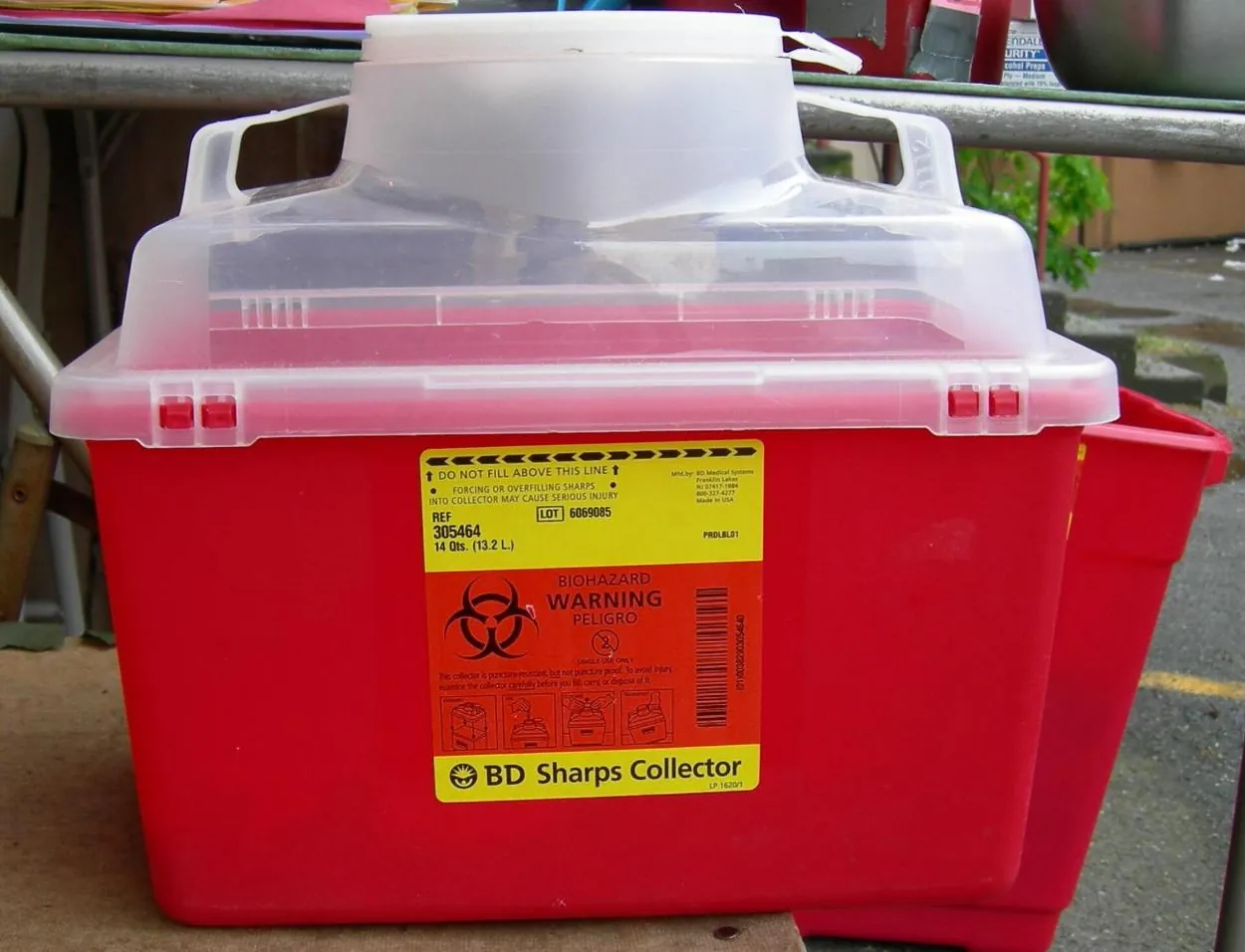
- Safe collection Sharps are picked up with tools into closable, puncture-resistant containers that are labeled and kept upright.
- Treat hard surfaces Benches, tables and play equipment with blood or residue are cleaned and disinfected according to the product label.
- Document We record what we collected and where, so your team can see which areas need attention most.
Limits worth knowing
An outdoor sweep covers the accessible areas we agree on. Dense brush, deep water, storm drains and private property outside the agreed boundary are not searched unless arranged in advance. No sweep can promise that an open area holds no sharps, especially if new items are discarded after we leave.
We do not enforce laws, remove people, or decide what belongings are abandoned. If a site involves an encampment, the responsible agency's procedures for notice, outreach and storage of belongings come first. Our encampment cleanup page explains how we work within those procedures.
Protecting maintenance crews
Park staff and groundskeepers face needlestick risk when mowing, raking or emptying trash. Employers whose workers may be exposed have obligations under OSHA's Bloodborne Pathogens Standard, enforced in Tennessee through TOSHA, which also maintains a state-specific sharps injury prevention standard. A sweep before mowing or a scheduled event can reduce exposure, but it does not replace your training and protective equipment program.
Anyone stuck by a needle should wash the area with soap and water and see a healthcare provider promptly.
Before a sweep
- Tell us about any recent reports from the public or staff.
- Share maps, gate codes and the contact person on the day of the visit.
- Let us know about events, games or programs we should schedule around.
- Hold off on mowing areas where needles have been reported.
Related services
Private properties with recurring finds may prefer scheduled needle sweeps. If an incident in a public space also involved blood, see public incident cleanup. We serve public and private owners in Nashville and across Middle Tennessee.