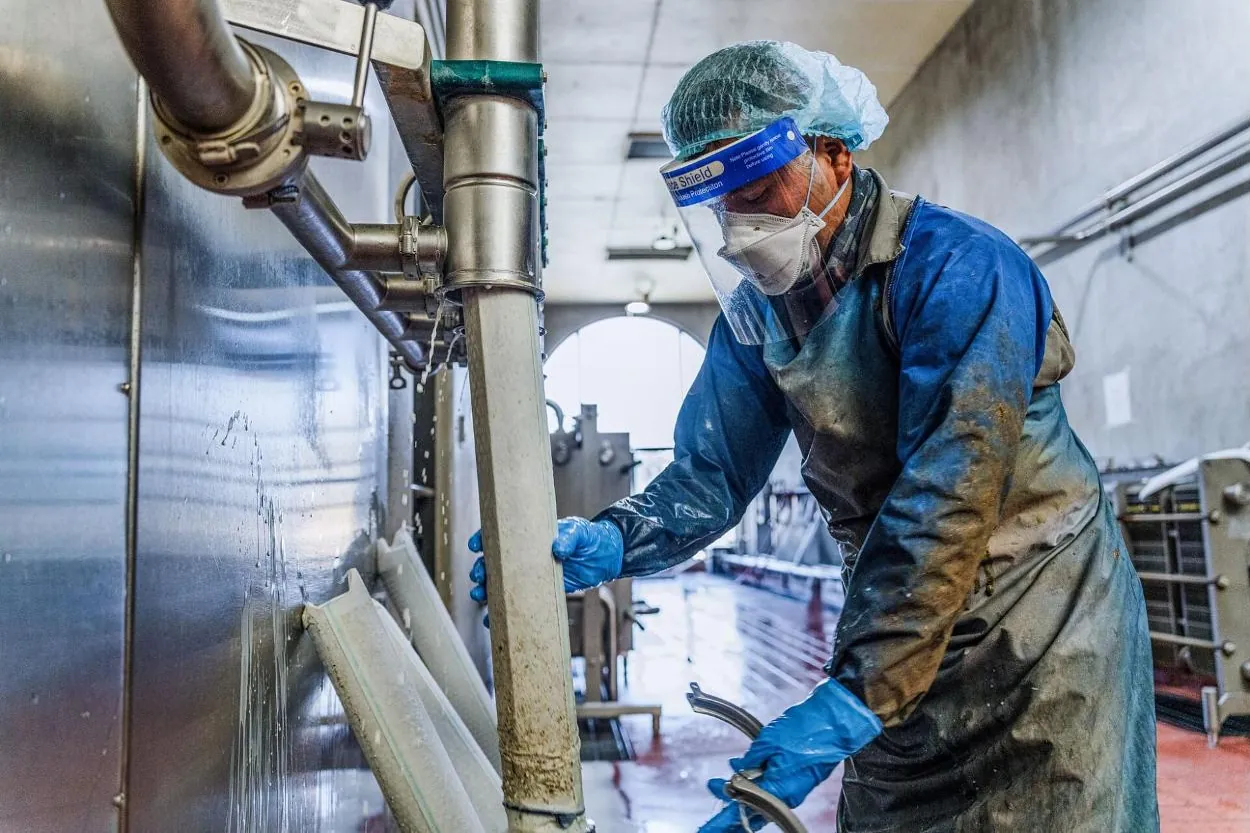
Cleaning, sanitizing and disinfecting are not the same thing
EPA draws a clear line between three terms that are often used interchangeably. Cleaning removes dirt and organic matter with soap or detergent. Sanitizing uses chemicals to kill bacteria on surfaces but is not intended to kill viruses. Disinfecting uses chemicals to kill viruses and bacteria on surfaces.
Sanitizers and disinfectants are registered by EPA as antimicrobial pesticides, and each product can only make the claims EPA has approved for its label. That is why we talk about the specific product and its directions rather than making broad promises about germs.
Situations where professional disinfection helps
Disinfection is usually one stage of a larger job. After a fluid event, for example, removal and cleaning come first; disinfecting a surface that still holds residue is far less effective.
- After blood, vomit, feces or other bodily fluids have been cleaned up
- After a sewage overflow or backup, once contaminated material is removed
- When an illness has moved through a household, office, classroom or care setting
- Before a rental unit, vehicle or room is returned to use after a biohazard event
- On a schedule, for facilities that want regular attention to restrooms and high-touch areas
How we approach a disinfection job
- Understand the situation We ask what happened, which organism is a concern if one is known, and which surfaces and materials are involved.
- Select the product We choose an EPA-registered disinfectant whose label claims and permitted surfaces fit the situation, and confirm whether its label allows the application method we plan to use.
- Clean first Visible soil and organic matter are removed so the disinfectant can contact the surface directly.
- Apply per label We apply the product by wiping, direct spraying or another label-permitted method, with the space cleared of people and pets when the label requires it.
- Hold contact time Surfaces are kept visibly wet for the full contact time on the label, which varies by product and organism.
- Finish and document Where the label calls for it, food-contact surfaces are rinsed. We note the product used and the areas treated so you have a record.
Choosing an application method
The method should follow the job, not the other way around. Wiping and direct spraying remain the most dependable approach for most high-touch surfaces. Electrostatic sprayers can help cover large areas and many objects efficiently, and fogging is sometimes used in large or cluttered spaces, but both have limits.
Electrostatic application is only appropriate with products whose labels include electrostatic directions, and EPA researchers found limited wrap-around coverage from these sprayers. If surfaces do not stay wet for the full contact time, the disinfectant may not work. We treat electrostatic spraying as an application method, not as a stronger form of disinfection. Learn more about electrostatic spraying and disinfection fogging.
Matching the product to the organism
When a specific illness is involved, product choice matters. EPA publishes lists of registered disinfectants grouped by the pathogens their labels address, including List S for bloodborne pathogens, List G for norovirus, List H for MRSA and VRE, List K for C. difficile spores, List P for Candida auris and List N for SARS-CoV-2.
These lists change, so we check the current EPA information rather than relying on what was true last season. A product that works against one organism may not carry a claim for another, and some of the hardest organisms to address require products with specific label claims and longer contact times.
For norovirus, CDC advises removing vomit or diarrhea with disposable towels before disinfecting. For C. diff, CDC points to List K products and the manufacturer's instructions, which often call for cleaning with soap and water first. See our infectious disease decontamination pages for organism-specific detail.
Safety and realistic expectations
Disinfectants are chemicals, and their labels set rules for protective equipment, ventilation and re-entry. We follow those directions and ask that occupants stay out of treated areas until it is appropriate to return.
Disinfection reduces microorganisms on the surfaces treated at the time of treatment. It does not create lasting protection unless a specific product's label carries an EPA-approved residual claim, and it cannot prevent the next person from bringing an illness in. We describe results in terms of what was cleaned and treated, not in terms of a space being free of all microorganisms.
A large share of disinfectant labels cover only hard, nonporous surfaces. Carpet, upholstery, mattresses and other porous items that are saturated with fluids often cannot be reliably disinfected and may need to be removed.
What falls outside disinfection work
- Medical decisions, testing of people and outbreak management belong to healthcare providers and public health officials.
- Duct cleaning and air-handler work go to an HVAC contractor.
- Pest control and rodent exclusion go to a pest control company.
- Regulated medical waste hauling goes to a medical waste vendor.
Homes, fleets and facilities across Middle Tennessee
We disinfect homes and rental units, vehicles and fleets, and commercial spaces such as offices, schools, gyms, churches, clinics and restaurants. Most residential work follows a specific incident, while many businesses prefer a recurring commercial disinfection program.
We are a mobile service based in the Nashville area and work in all 41 counties of Middle Tennessee. Cost depends on the size of the area, the surfaces involved and the product required; we explain the scope and what it involves before any work starts, so you know what is included.
Specialized disinfection & sanitization services
- Electrostatic Spraying — Electrostatic application of EPA-registered disinfectants labeled for it, after cleaning, for classrooms, offices, gyms, vehicles and other large spaces.
- Disinfection Fogging — Fogging with EPA-registered disinfectants whose labels permit it, in unoccupied large or cluttered spaces, as a supplement to cleaning and direct treatment.
- Post-Incident Disinfection — Disinfection after blood, bodily fluids, sewage, deaths or illness, starting with removal and cleaning and finishing with EPA-registered products used per label.
- Commercial Disinfection Programs — Scheduled disinfection of high-traffic areas for offices, schools, gyms, churches and other facilities, with visits planned around operating hours.