Who schedules sweeps
Sweeps make the most sense for properties where needles appear repeatedly rather than once. Apartment communities, extended-stay hotels, retail centers, office parks, churches, schools, libraries and HOAs are typical clients, along with owners of vacant buildings and lots.
Vacant units are worth including, since they are often where needles collect unnoticed. Some clients start with a one-time sweep after a specific incident, such as a resident finding a syringe near a playground. Others schedule regular visits after a pattern becomes clear.
How a sweep works
- Site walk and map On the first visit, we walk the property with you, note where needles have been reported, and agree on the zones to cover.
- Organized passes Technicians move through each zone in overlapping lines, checking ground cover, shrubs, mulch beds, fence lines, stairwells, dumpster enclosures and furniture.
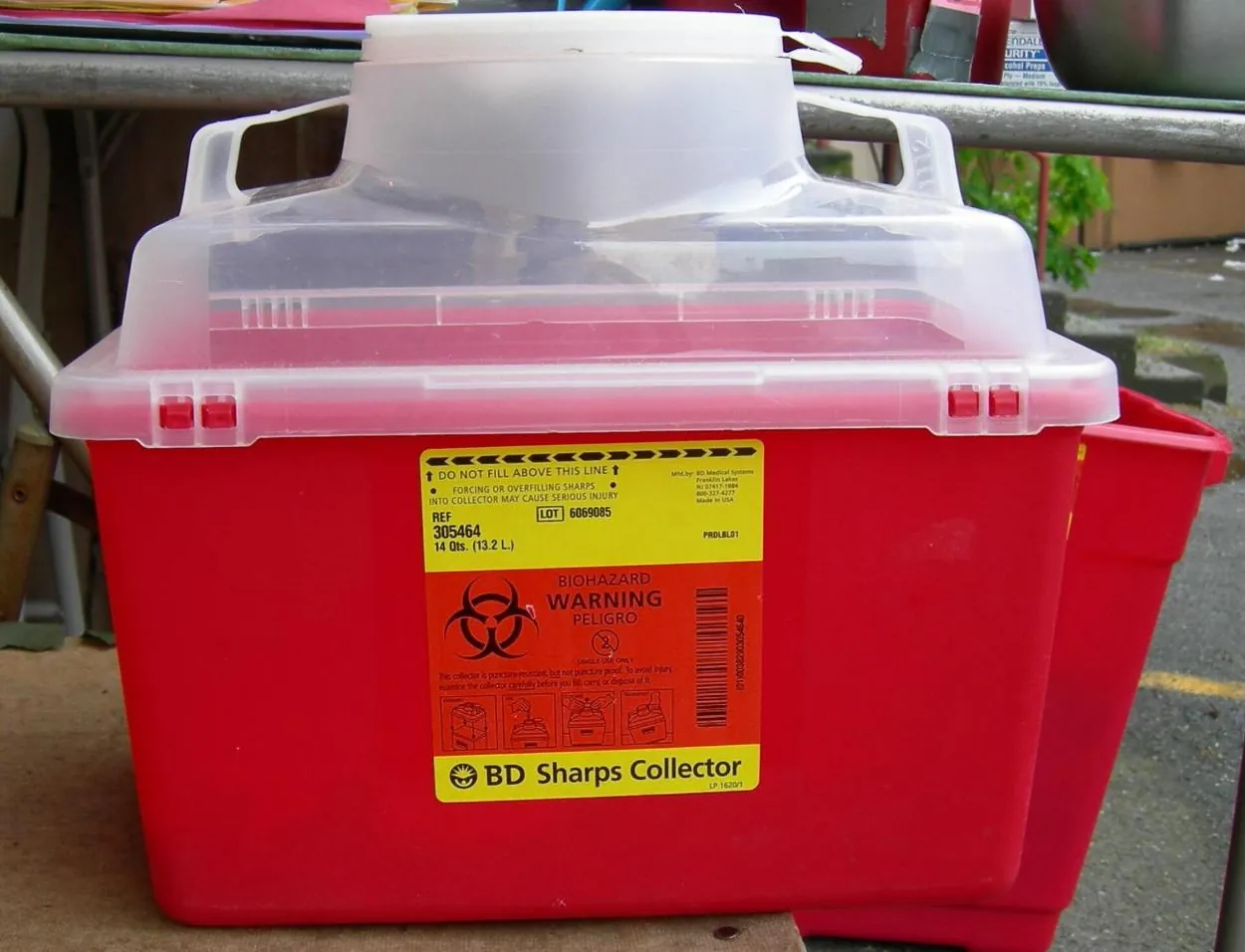
- Collection Each syringe is picked up with a tool and placed directly into a closable, puncture-resistant sharps container. Other paraphernalia is bagged.
- Spot cleaning Blood or residue on hard surfaces near collection points is cleaned and disinfected with an EPA-registered product per label.
- Records We note the number of items collected and where they were found, so you can compare visit to visit.
Places needles tend to collect
- Behind and beside dumpsters, trash enclosures and loading docks
- Stairwells, landings and under exterior staircases
- Landscaping beds, hedges and mulch near building edges
- Laundry rooms, mail areas, breezeways and courtyards
- Parking garage corners and stair towers
- Restrooms, especially tank lids, trash bins and ceiling tiles
Choosing a schedule
Frequency depends on what you are seeing. Some properties need weekly visits for a period, then step down as conditions change. Others only need a sweep before a seasonal event, a school year or a property inspection. We base our recommendation on the counts from earlier visits, and you decide what fits your budget and situation.
Between visits, you can call us for a specific find. Many clients find that having a record of where items turn up also helps them make decisions about lighting, landscaping and access control.
Starting with a baseline
The first sweep on a property usually takes longest and finds the most, because it clears items that may have accumulated for weeks or months. Later visits tend to be faster and show whether finds are steady, rising or falling in each zone.
We compare counts from visit to visit and tell you when a schedule could reasonably be reduced, or when a new hot spot has appeared.
An honest note on results
A sweep is a careful search of the accessible areas we agree to cover. It reduces the chance of someone encountering a needle, but it cannot promise that a property holds no sharps at all. Items can be hidden in walls, buried deeply or dropped after we leave. We will always tell you what we searched and what we did not.
Your staff and residents
Maintenance and landscaping staff are often the ones who find needles first. Employers whose workers may be exposed to sharps have their own obligations under OSHA's Bloodborne Pathogens Standard and TOSHA's state rules, including training and protective equipment. A sweep schedule can reduce how often your staff encounter sharps, but it does not replace those obligations.
Residents and staff who are stuck by a needle should wash the area with soap and water and contact a healthcare provider promptly.
Related services
For parks, greenways and other open public areas, see public area sharps removal. Property managers with broader needs can read about our property management biohazard services. We schedule sweeps throughout Nashville and Middle Tennessee.