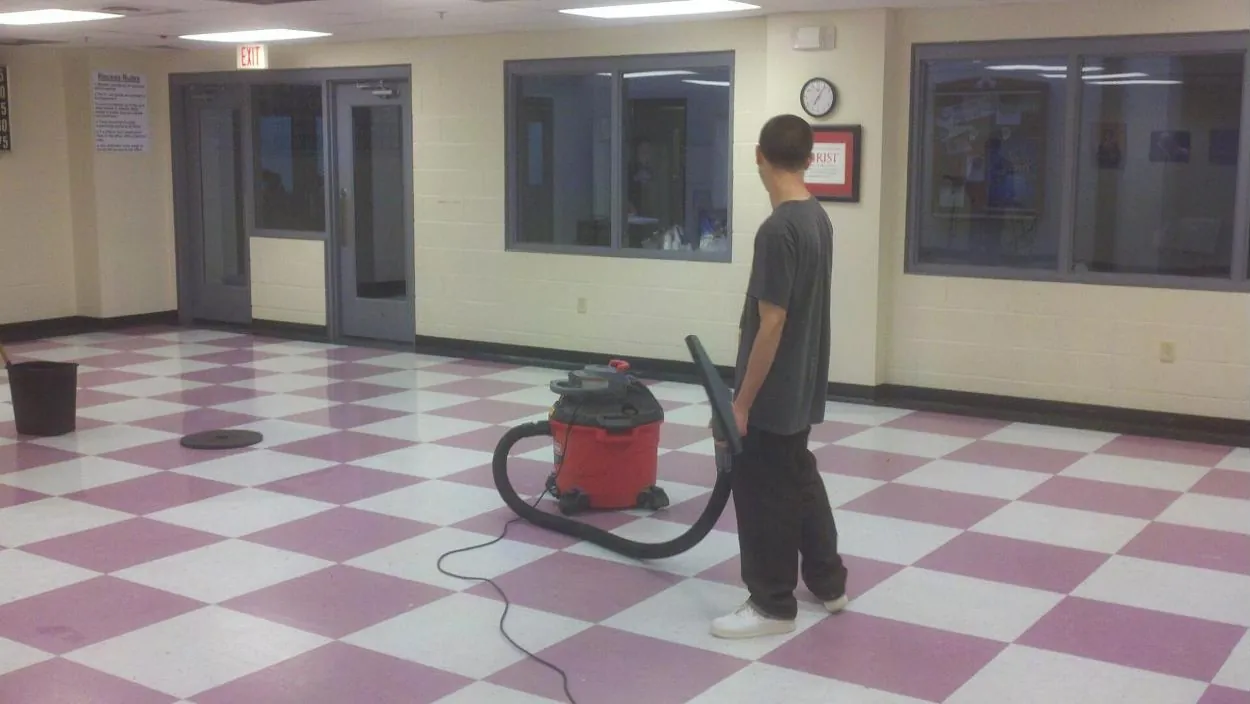
Beyond the custodial closet
School custodians are often trained to handle small spills under the district's exposure control plan. Some incidents call for more: a serious injury in a gym or on a playground, a restroom sewage overflow, widespread vomiting during an illness, a death in a residence hall, or needles found on school grounds.
We serve K-12 public and private schools, colleges and universities, residence halls, and child-care centers across Middle Tennessee.
Campus incidents we respond to
- Blood from injuries or fights in classrooms, hallways, gyms and athletic areas
- Vomit and diarrhea, including illness spreading through a building
- Restroom and locker-room sewage backups
- A death or traumatic event in a dormitory or campus building, after release by authorities
- Needles and paraphernalia on playgrounds, parking lots or grounds
- Bodily fluids on school buses
Scheduling around students
Most schools prefer that cleanup happen after dismissal, overnight or on weekends so classes are not disrupted. We can plan for that when the situation allows, depending on scope, access and crew availability. If an area must be used before work can be finished, we will tell you what is safe and what is not.
When an incident is upsetting for students and staff, we keep our presence quiet and work only with the administrators you designate.
Our sequence on campus
- Coordinate We confirm the affected areas, who our contact is, and any sign-in, escort or vendor requirements your district or campus has.
- Contain We close off the area with barriers and signage.
- Remove and clean Fluids and contaminated materials are removed, and surfaces are cleaned before disinfection.
- Disinfect EPA-registered products are applied per label, with food-contact surfaces in cafeterias rinsed when the label requires it.
- Check and report We review the area with your facilities contact and describe what was done for your records.
Illness in classrooms and dorms
When norovirus or another illness moves through a building, CDC advises removing vomit or diarrhea with disposable towels and then disinfecting with an appropriate product, such as one on EPA's List G for norovirus. Decisions about closures, attendance and notifications rest with school leaders and the health department. We can provide cleaning and disinfection that supports their plan. See norovirus decontamination for detail.
Employer duties and vendor screening
Districts and universities that employ custodians, nurses or coaches with potential blood exposure are responsible for their own exposure control plan, training and hepatitis B vaccination offers under OSHA's standard, enforced in Tennessee by TOSHA. Bringing us in does not change those obligations.
Many districts require background checks or other screening for vendors who work on campus. Please tell us your requirements up front so we can discuss them before scheduling.
Before we arrive on campus
Move students away from the area and close it off with whatever is at hand, such as cones, chairs or a locked door. Do not have students help clean up. If a custodian has already started, ask them to stop once the immediate hazard is contained, and to set aside any towels or materials they used in a sealed bag.
If a student or staff member had direct contact with blood, follow your school nurse's protocol and your exposure control plan. If a death or crime may be involved, wait for law enforcement or the medical examiner to release the area before anyone cleans.
Buses and athletic facilities
Bus interiors, locker rooms, wrestling mats and weight rooms all present their own surfaces. For transportation, see bus and transit cleanup. For regular service across a campus, a commercial disinfection program may fit better than one-time calls.