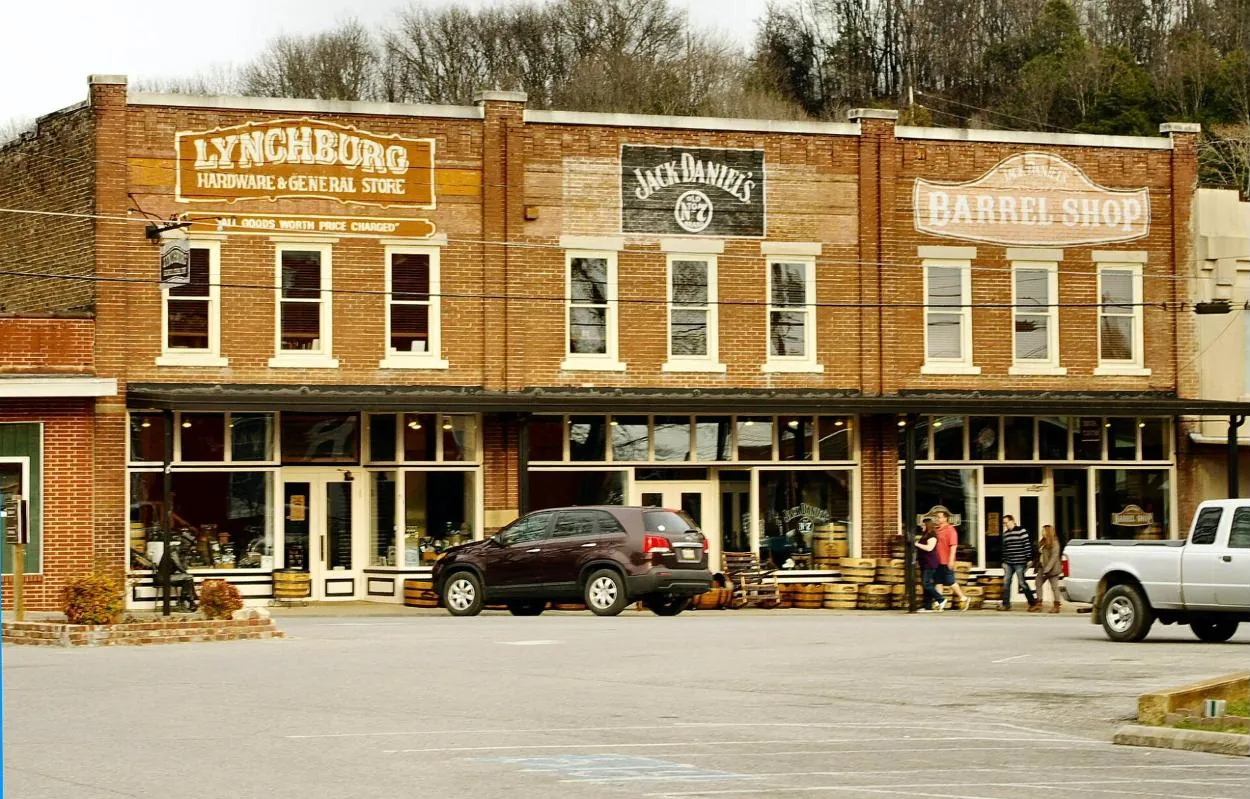
A small county with one government
Moore County was created in 1871 and is Tennessee's second-smallest county by area. Lynchburg became its seat in 1873, and today the two are governed together as the Metropolitan Lynchburg/Moore County government, with boundaries that match the county's. The 2020 population of about 6,500 counts everyone in the county.
| Communities we serve | Lynchburg and the surrounding area |
|---|---|
| Main highways | State Route 55 (Majors Boulevard, the main thoroughfare), State Route 50 (meets SR 55 just south of town; to Fayetteville), State Route 129 (meets SR 55 just south of town; west to Petersburg) |
| Neighboring Middle Tennessee counties | Bedford, Coffee, Franklin, Lincoln |
Lynchburg sits in the valley of East Fork Mulberry Creek, part of the Elk River watershed. Its downtown is listed on the National Register of Historic Places as the Lynchburg Historic District, around the 1885 courthouse and the 1893 jail, now a museum. The Jack Daniel Distillery draws a steady stream of visitors, even though Moore County remains a dry county, and Motlow State Community College's campus lies in the north of the county.
Roads, farms and what we are called for
State Route 55, Majors Boulevard in town, is the main road through Lynchburg, and SR 50 and SR 129 meet it just south of town, heading toward Fayetteville and Petersburg. Tullahoma is about ten miles away, and Shelbyville, Fayetteville and Winchester are each roughly fifteen miles off.
Most of Moore County is rural and agricultural, so many needs involve farmhouses on septic, barns and outbuildings with rodent or animal waste, and homes where a person lived alone. In Lynchburg, visitor-facing businesses around the square and along Majors Boulevard can call after restroom incidents, injuries or other contamination.
- Houses and storefronts in the historic district
- Farms, barns and rural homes countywide
- Businesses that serve distillery visitors
- Schools, churches and campus buildings
How we serve Moore County
Moore County is served by our mobile service from the Nashville area, not by a local office. Call 615-513-5112 at any hour, and we will talk through the situation, explain the scope and then plan the drive. On site we use containment and protective equipment, remove materials that cannot be cleaned and disinfect with EPA-registered products per label directions.
When a death occurs at home, official release by the medical examiner or police comes before our work. Neighboring counties are covered too, including Coffee County around Tullahoma.
Services available throughout Moore County
- Blood & Bodily Fluid Cleanup — Removal and disinfection of blood, urine, vomit, feces and other bodily fluids from homes, businesses and vehicles.
- Unattended Death Cleanup — Careful, private cleanup after a death that went undiscovered, including decomposition fluids, odor and affected materials.
- Crime Scene Cleanup — Cleanup after law enforcement releases a scene — blood, fingerprint powder, tear gas residue and damage from forced entry.
- Trauma Scene Cleanup — Respectful cleanup after suicides, serious injuries and accidents at home or at work.
- Drug Residue Cleanup — Decontamination of homes, rentals and vehicles where methamphetamine, fentanyl or other drugs were used.
- Sharps & Needle Cleanup — Safe collection and disposal of discarded needles, syringes and drug paraphernalia from properties and public areas.
- Homeless Encampment Cleanup — Coordinated, respectful cleanup of vacated encampments, squatter sites, garages and alleys for property owners.
- Hoarding Cleanup — Patient, judgment-free cleanouts of hoarded and gross-filth homes, including animal hoarding situations.
- Animal Waste & Rodent Cleanup — Cleanup of rodent droppings, bird and bat guano, raccoon latrines, pet waste and dead animals.
- Sewage Cleanup — Cleanup and disinfection after sewage backups, toilet overflows, septic failures and Category 3 water.
- Infectious Disease Decontamination — Targeted cleaning and disinfection with EPA-registered products after illnesses such as norovirus, MRSA or C. diff.
- Vehicle Biohazard Cleanup — Biohazard cleanup for personal cars, rideshare vehicles, fleets, buses, police cars and ambulances.
- Commercial Biohazard Cleanup — Biohazard response for property managers, hotels, healthcare, schools, gyms, restaurants and other workplaces.
- Odor Removal & Deodorization — Source-focused odor removal after decomposition, smoke, pet urine or sewage, with deodorization where appropriate.
- Disinfection & Sanitization — Post-incident and scheduled disinfection using EPA-registered products and appropriate application methods.